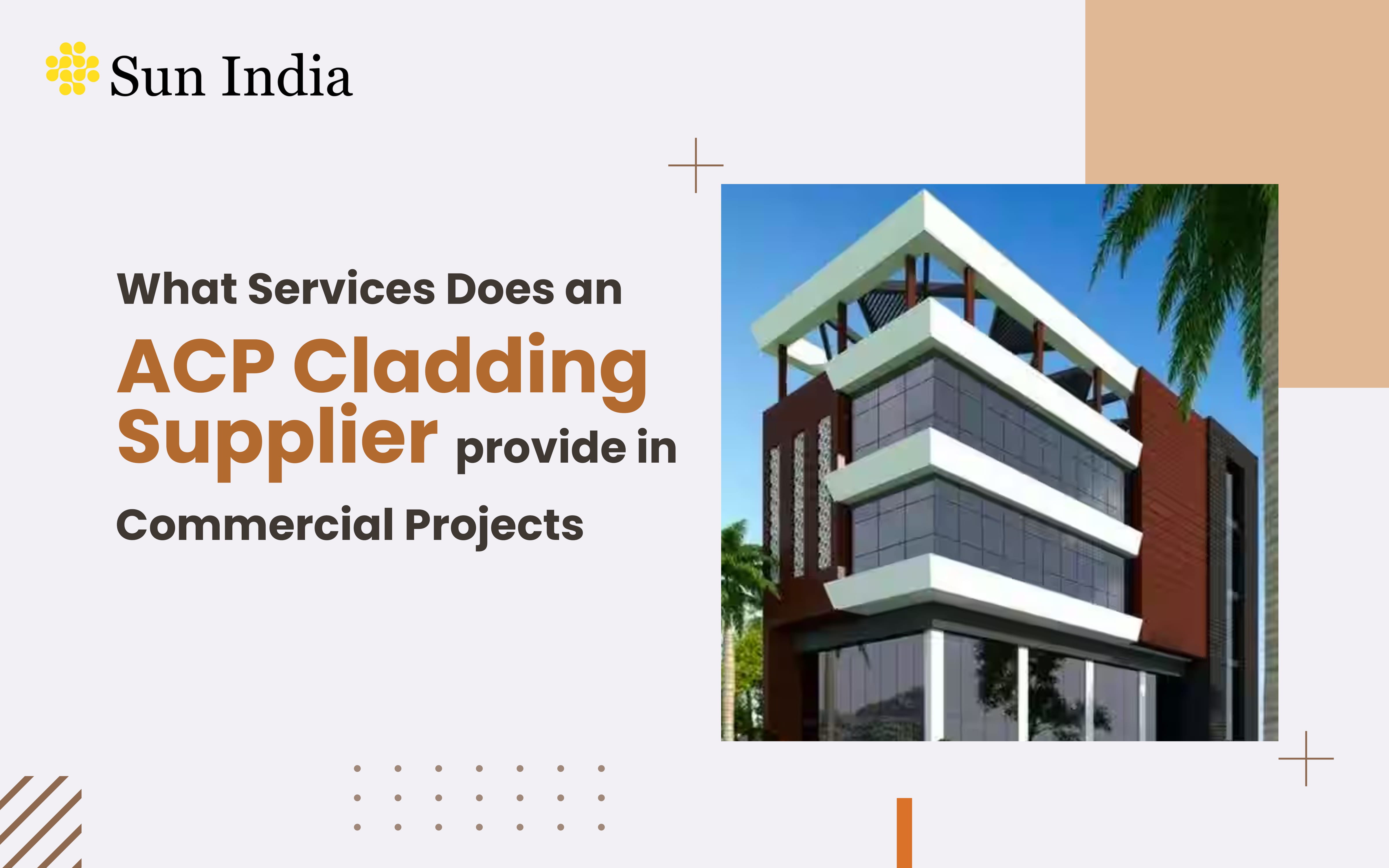
What Services Does an ACP Cladding Supplier Provide in Commercial Projects?
Commercial architecture is evolving to balance aesthetics, durability, and functionality. Buildings today are not just structural spaces; they represent brand identity, professionalism, and long-term investment value. One of the key elements driving this transformation is ACP cladding.
ACP (Aluminium Composite Panel) cladding has become a preferred choice for commercial projects due to its versatility, lightweight structure, and modern finish. From office complexes to retail outlets, it is widely used to create clean, contemporary facades. However, achieving the desired results requires more than just selecting panels. It involves planning, design, fabrication, and precise installation.
This is where an ACP cladding supplier plays a crucial role. Businesses and developers working on ACP cladding in Delhi NCR often rely on experienced suppliers to manage the entire process from material selection to final execution. Companies like Sun India and similar providers approach cladding projects with a structured methodology.
This article explains the range of services an ACP cladding supplier provides in commercial projects and why each stage is essential for long-term performance and visual appeal.
What Is ACP Cladding?
ACP cladding refers to the use of aluminium composite panels to cover building exteriors or interiors. These panels consist of two aluminium sheets bonded to a non-aluminium core, offering strength and flexibility.
Key Features of ACP Cladding
- Lightweight yet durable
- Weather-resistant and corrosion-resistant
- Available in multiple colors and finishes
- Suitable for both interior and exterior applications
These properties make ACP cladding a practical solution for modern commercial buildings.
Core Services Provided by an ACP Cladding Supplier
1. Project Consultation and Requirement Analysis
The process begins with understanding the project’s scope and objectives.
This includes:
- Building type and design requirements
- Environmental conditions
- Budget considerations
This stage ensures that the cladding solution aligns with both functional and aesthetic goals.
2. Design and Planning
An ACP cladding supplier collaborates with architects and designers to develop a detailed plan.
Key aspects include:
- Facade layout and panel arrangement
- Color schemes and finishes
- Integration with overall building design
Proper planning helps avoid inconsistencies during execution.
3. Material Selection
Choosing the right ACP panels is critical for performance and appearance.
Suppliers assist in selecting:
- Panel thickness and grade
- Fire-resistant or standard panels
- Surface finishes such as matte, gloss, or metallic
This ensures suitability for specific commercial applications.
4. Fabrication and Customization
ACP panels often require customization to fit design specifications.
Fabrication services include:
- Cutting and shaping panels
- Bending and grooving
- Creating custom patterns or branding elements
Precision during this stage ensures seamless installation.
5. Structural Framework Installation
Before panels are installed, a supporting framework is set up.
This involves:
- Installing metal substructures
- Ensuring alignment and stability
- Preparing surfaces for panel attachment
A strong framework is essential for durability and safety.
6. Panel Installation
The installation phase brings the design to life.
Key considerations include:
- Accurate panel placement
- Secure fixing methods
- Maintaining uniform gaps and alignment
Proper installation ensures both aesthetic consistency and structural integrity.
7. Quality Checks and Finishing
After installation, suppliers conduct inspections to ensure quality standards are met.
This includes:
- Checking alignment and finishing
- Ensuring no visible defects
- Verifying structural stability
Final finishing enhances the overall appearance of the facade.
8. Maintenance Guidance and Support
ACP cladding suppliers also provide guidance on maintaining the panels.
This may include:
- Cleaning recommendations
- Periodic inspection guidelines
- Repair or replacement support
Regular maintenance helps extend the lifespan of the cladding.
Importance of ACP Cladding in Commercial Projects
Enhances Building Aesthetics
ACP panels offer a sleek and modern look, improving the visual appeal of commercial spaces.
Improves Durability
The material is resistant to weather conditions, making it suitable for long-term use.
Supports Brand Identity
Custom designs and finishes allow businesses to reflect their brand through building exteriors.
Enables Design Flexibility
ACP panels can be shaped and customized to match complex architectural designs.
Role of ACP Cladding Suppliers in Delhi NCR
In a diverse market like Delhi NCR, ACP cladding suppliers play a critical role in managing complex commercial projects.
Local Expertise
Suppliers understand regional climate conditions and construction requirements.
Coordination with Stakeholders
They work closely with architects, contractors, and project managers to ensure smooth execution.
Efficient Project Management
Timely delivery and installation are essential in commercial projects, and suppliers help maintain schedules.
How Companies Like Sun India Contribute
Organizations such as Sun India focus on delivering end-to-end ACP cladding solutions for commercial projects.
Their approach typically includes:
- Detailed project assessment
- Customized design and material selection
- Structured execution and quality control
This ensures that the final output aligns with both design expectations and functional requirements.
Common Challenges in ACP Cladding Projects
Despite its advantages, ACP cladding projects may face challenges such as:
- Ensuring precise alignment across large surfaces
- Managing environmental factors like heat and moisture
- Coordinating multiple teams during installation
Working with experienced suppliers helps address these challenges effectively.
Factors to Consider When Choosing an ACP Cladding Supplier
Experience and Expertise
Suppliers with proven experience can handle complex projects more efficiently.
Material Quality
High-quality panels ensure durability and long-term performance.
Project Support
End-to-end services simplify project management and reduce risks.
FAQs:
1. What does an ACP cladding supplier do?
They provide services such as consultation, design, material supply, fabrication, and installation for cladding projects.
2. Is ACP cladding suitable for all commercial buildings?
Yes, it is versatile and can be adapted to different building types and designs.
3. How long does ACP cladding last?
With proper maintenance, ACP cladding can last for many years.
4. Can ACP panels be customized?
Yes, they can be tailored in terms of size, shape, and finish.
5. Why is professional installation important?
It ensures structural safety, durability, and a consistent visual finish.
Conclusion:
ACP cladding has become a key element in modern commercial construction, especially in regions like Delhi NCR. However, the effectiveness of ACP cladding depends on the quality of services provided by the supplier.
From consultation to installation, each stage plays a role in achieving a durable and visually appealing facade. Working with experienced providers such as Sun India helps ensure that projects are executed with precision and consistency.
For businesses planning commercial developments, understanding the services offered by an ACP cladding supplier is an important step toward making informed decisions. A well-executed cladding project not only enhances building aesthetics but also contributes to long-term performance and brand representation.
If you are evaluating options for ACP cladding in Delhi NCR, consider how a structured approach to design and execution can support your project goals and deliver lasting value.