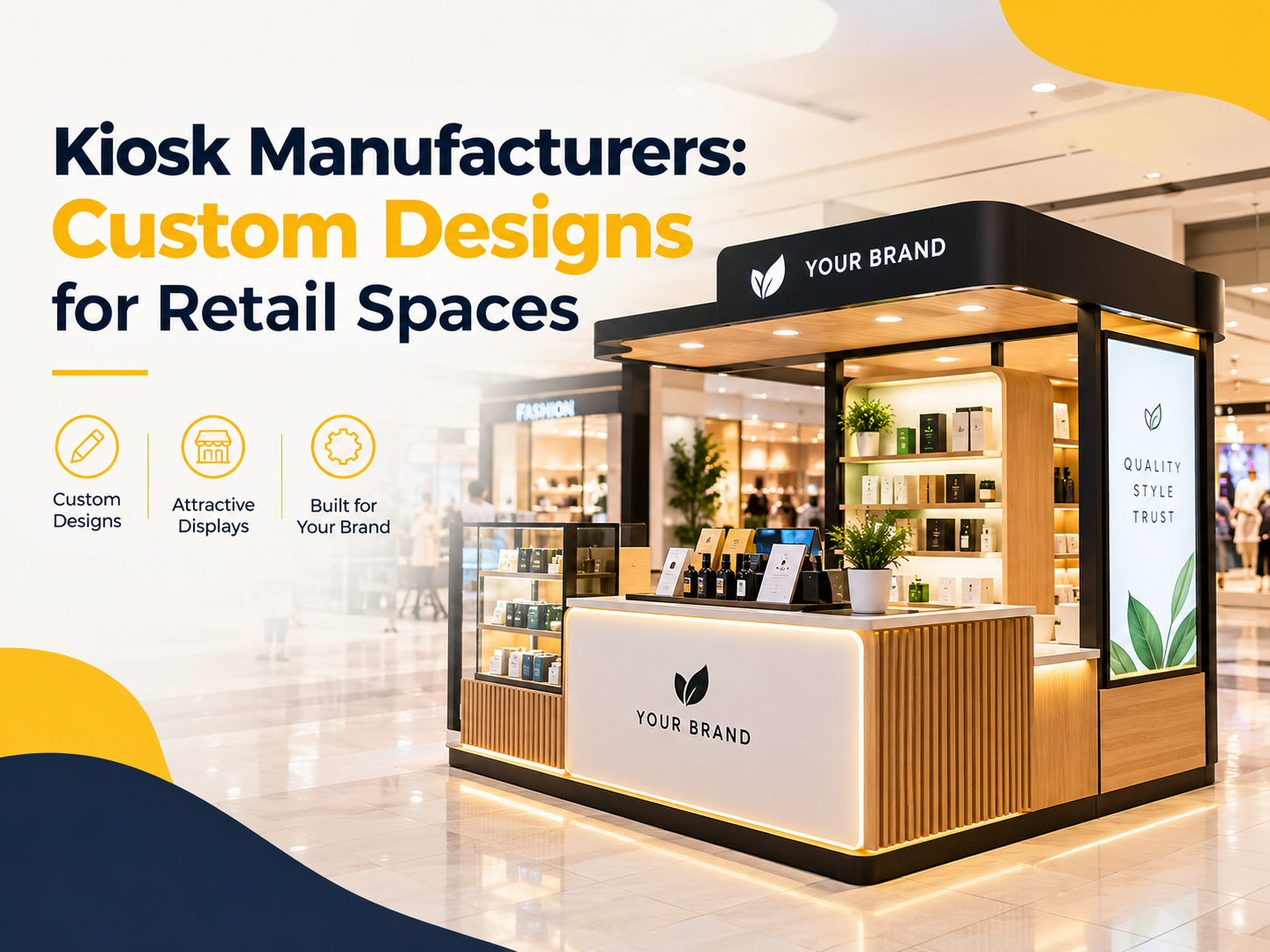
Kiosk Manufacturers: Custom Designs for Retail Spaces
Create attractive retail spaces with customised kiosks designed to improve customer engagement, product visibility, and shopping experiences.
In today's competitive market, businesses need creative ways to attract customers and present their products. A well-designed kiosk can help brands utilise available space, display products effectively, and communicate with customers. From shopping malls and retail stores to exhibitions and promotional events, kiosks have become an important part of modern branding and retail marketing.
Choosing experienced kiosk manufacturers is essential for creating a kiosk that matches your brand identity, business requirements, and available space. A professionally designed kiosk combines functionality, durability, and visual appeal to create a better customer experience.
Sun India offers branding and display solutions that help businesses create engaging retail environments. Whether you need a customised retail counter, a promotional kiosk, or a product display unit, selecting the right design and manufacturing partner can make a significant difference.
What Are Kiosks and Why Are They Important?
A kiosk is a compact structure or display unit used to showcase products, provide information, support sales, or promote a brand. It can be installed in shopping malls, retail outlets, exhibitions, airports, commercial spaces, and other high-footfall locations.
Modern kiosks are available in different sizes, materials, and designs. Some are created for product displays, while others function as customer service counters, sampling stations, or interactive information points.
Businesses use kiosks because they offer several benefits:
- Better product visibility: Present products in an organised and attractive manner.
- Space optimisation: Make effective use of limited retail space.
- Brand promotion: Display brand colours, logos, and marketing messages.
- Customer engagement: Encourage customers to explore products and interact with the brand.
- Flexible applications: Use kiosks for retail sales, promotions, exhibitions, and product launches.
How to Choose the Right Kiosk Manufacturers
Selecting the right manufacturing partner requires more than comparing prices. Businesses should consider design quality, material selection, customisation options, durability, and installation requirements.
Here are some important factors to evaluate before making a decision.
1. Design and Customisation Capabilities
Every business has different branding and operational requirements. Experienced custom kiosk manufacturers can create designs according to your available space, product dimensions, customer movement, and brand guidelines.
Customisation may include shelves, storage compartments, display panels, lighting, counters, graphics, and digital screens. A customised kiosk should look attractive while remaining practical for everyday use.
2. Material Quality and Durability
The materials used in kiosk manufacturing influence the product's appearance, strength, maintenance, and lifespan. Depending on the application, kiosks may be manufactured using wood, metal, acrylic, glass, laminates, or a combination of materials.
For busy shopping malls and commercial locations, durability is particularly important. Choose materials that suit the installation environment, expected footfall, product weight, and cleaning requirements.
3. Branding and Visual Appeal
A kiosk is not just a display structure; it is also a branding opportunity. Colours, graphics, lighting, product placement, and finishing should communicate your brand message clearly.
Professional retail kiosk manufacturers understand the importance of combining display functionality with brand presentation. An attractive kiosk can help businesses create a consistent visual identity across multiple retail locations.
4. Space Planning and Functionality
Before finalising a design, consider the available floor area, customer movement, staff requirements, electrical connections, and storage needs.
A well-planned kiosk for retail should allow customers to view products comfortably while giving staff enough room to manage transactions, restock items, and provide assistance.
5. Manufacturing and Installation Support
Check whether the kiosk manufacturing company can manage design development, production, finishing, transportation, and installation according to your project requirements.
Clear communication about dimensions, timelines, materials, and installation responsibilities can help prevent delays and ensure a smoother project experience.
Types of Kiosks for Different Business Needs
Different industries require different kiosk designs. Understanding the available options can help you select a suitable solution.
Retail Display Kiosks
Retail display kiosks are commonly used for cosmetics, accessories, electronics, lifestyle products, packaged goods, and other merchandise. They help businesses organise products and create a dedicated selling area within a store or shopping centre.
Mall Kiosks
Mall kiosk manufacturers develop compact structures designed for shopping malls and other high-footfall commercial spaces. These kiosks may be used for accessories, food products, mobile accessories, gifting items, product demonstrations, and promotional activities.
The design should consider mall guidelines, available floor space, customer accessibility, and the type of products being displayed.
Promotional and Brand Activation Kiosks
Promotional kiosks are useful for product launches, sampling campaigns, consumer engagement activities, and brand activations. They can incorporate branded graphics, product demonstration areas, storage, and customer interaction counters.
These kiosks help businesses create a dedicated space for communicating with their target audience.
Exhibition Kiosks
Exhibition kiosks support product presentations, information sharing, and visitor interaction at trade fairs, corporate exhibitions, and business events. Their design should align with the overall exhibition setup and make the brand easy to recognise.
Custom-Built Kiosks
Some businesses need specialised structures that cannot be fulfilled by standard designs. Custom kiosk manufacturers can develop solutions according to specific dimensions, product requirements, materials, and visual preferences.
Custom-built kiosks are particularly useful when a brand wants a distinctive appearance or needs to accommodate specialised equipment.
Why Businesses Should Invest in a Custom Kiosk
A customised kiosk allows businesses to make better use of their retail environment. Instead of choosing a standard structure that may not meet every requirement, companies can develop a unit suited to their products, customers, and branding strategy.
A kiosk maker can help translate a business concept into a practical display structure. This includes selecting suitable materials, planning storage, arranging product displays, and incorporating branded elements.
Customisation can also support consistency when a company needs similar kiosks across multiple locations. Standardised designs help maintain a recognisable brand appearance while allowing adjustments for individual store layouts.
Before ordering a retail kiosk for sale, businesses should confirm the dimensions, finish, material specifications, transportation requirements, and any additional features. These checks help ensure that the final product meets practical and visual expectations.
How to Find Kiosk Manufacturers Near Me
Businesses searching for kiosk manufacturers near me often want convenient communication, timely project coordination, and dependable manufacturing support.
Start by identifying manufacturers that understand your industry and the type of kiosk you need. Review their previous projects, customisation capabilities, material options, and experience with retail or commercial installations.
Request a detailed quotation that includes design, manufacturing, finishing, delivery, and installation wherever applicable. Comparing quotations on the basis of specifications and service scope is more useful than considering price alone.
You should also discuss your project timeline, installation location, maintenance needs, and future expansion plans. These details help the manufacturer recommend a suitable solution.
A reliable kiosk supplier should understand your requirements and communicate clearly throughout the project.
Why Consider Sun India for Kiosk and Display Solutions?
Sun India focuses on brand image and solutions for signage, point-of-purchase displays, merchandising, and retail environments. Businesses looking to improve product presentation can explore display solutions that align with their branding and operational needs.
When planning a kiosk project, it is important to consider how the structure will support product visibility, customer interaction, and the overall shopping experience.
From selecting a suitable layout to deciding on finishes and branding elements, each detail contributes to the final result. Businesses should communicate their objectives, budget, location, and design expectations before beginning production.
Visit sunindia.in to learn more about Sun India's branding and display solutions and discuss the requirements of your next retail display project.
FAQs
1. What should I consider when choosing kiosk manufacturers?
When choosing kiosk manufacturers, consider their design capabilities, material quality, customisation options, manufacturing experience, and installation support. Check previous projects to understand their workmanship and finishing standards. Also, request a detailed quotation covering specifications, delivery timelines, and additional services. A suitable manufacturer should understand your business objectives and recommend a kiosk that meets your practical and branding requirements.
2. What are the benefits of hiring custom kiosk manufacturers?
Custom kiosk manufacturers create display structures according to your available space, products, brand identity, and operational requirements. Customisation allows you to select dimensions, materials, shelves, lighting, storage, and graphics. This helps businesses develop a distinctive retail presentation while using space efficiently. A customised kiosk can also support consistent branding across multiple stores, shopping malls, exhibitions, and promotional locations.
3. How can I find reliable kiosk manufacturers near me?
To find reliable kiosk manufacturers near me, search for businesses offering the type of kiosk you require. Review their portfolios, product quality, material options, customer feedback, and manufacturing capabilities. Ask for a written quotation with clear specifications and timelines. Compare suppliers based on overall value, communication, and service scope rather than price alone to make an informed decision for your project.
4. What is the difference between retail kiosk manufacturers and mall kiosk manufacturers?
Retail kiosk manufacturers generally create display units for stores, showrooms, and different retail environments. Mall kiosk manufacturers focus on kiosks designed for shopping centres, where floor space, customer movement, visibility, and mall-specific guidelines are important. Both may offer customised structures, but the final design depends on the installation location, products, branding requirements, and intended customer experience.
5. What factors affect the cost of a retail kiosk?
The cost of a retail kiosk depends on its dimensions, materials, design complexity, finishing, lighting, storage, graphics, and additional equipment. Transportation and installation can also affect the overall budget. Custom-built kiosks may require more design and production work than standard units. Businesses should share their requirements with the kiosk supplier and request an itemised quotation before confirming an order.
Conclusion
Choosing the right kiosk design and manufacturing partner can help businesses improve product presentation, utilise retail space effectively, and create memorable customer experiences. From mall installations to customised promotional displays, the right kiosk should combine durability, functionality, and brand appeal.
Before selecting a kiosk manufacturing company, evaluate its design approach, materials, customisation options, and project support. With careful planning and a clear understanding of your business needs, a well-designed kiosk can become a valuable part of your retail and brand communication strategy.
Explore Sun India for branding, signage, merchandising, and display solutions that support your business presentation goals.
Contact Sun India
Looking for reliable solutions for brand activation, BTL activation, retail branding, displays, kiosks, signage, or merchandising? Connect with Sun India to discuss your branding and activation requirements.
Sun India - Events & Production Company
A-901, 9th Floor, Urbtech Trade Center, Sector-132,
Noida – 201301, Gautam Buddh Nagar,
Uttar Pradesh, India
Website: https://sunindia.in/
Email: mail@sunindia.in
Mobile No.: 9899091708, 9899548200
Get in touch with Sun India to plan customised branding solutions that help your business create a strong and engaging presence.