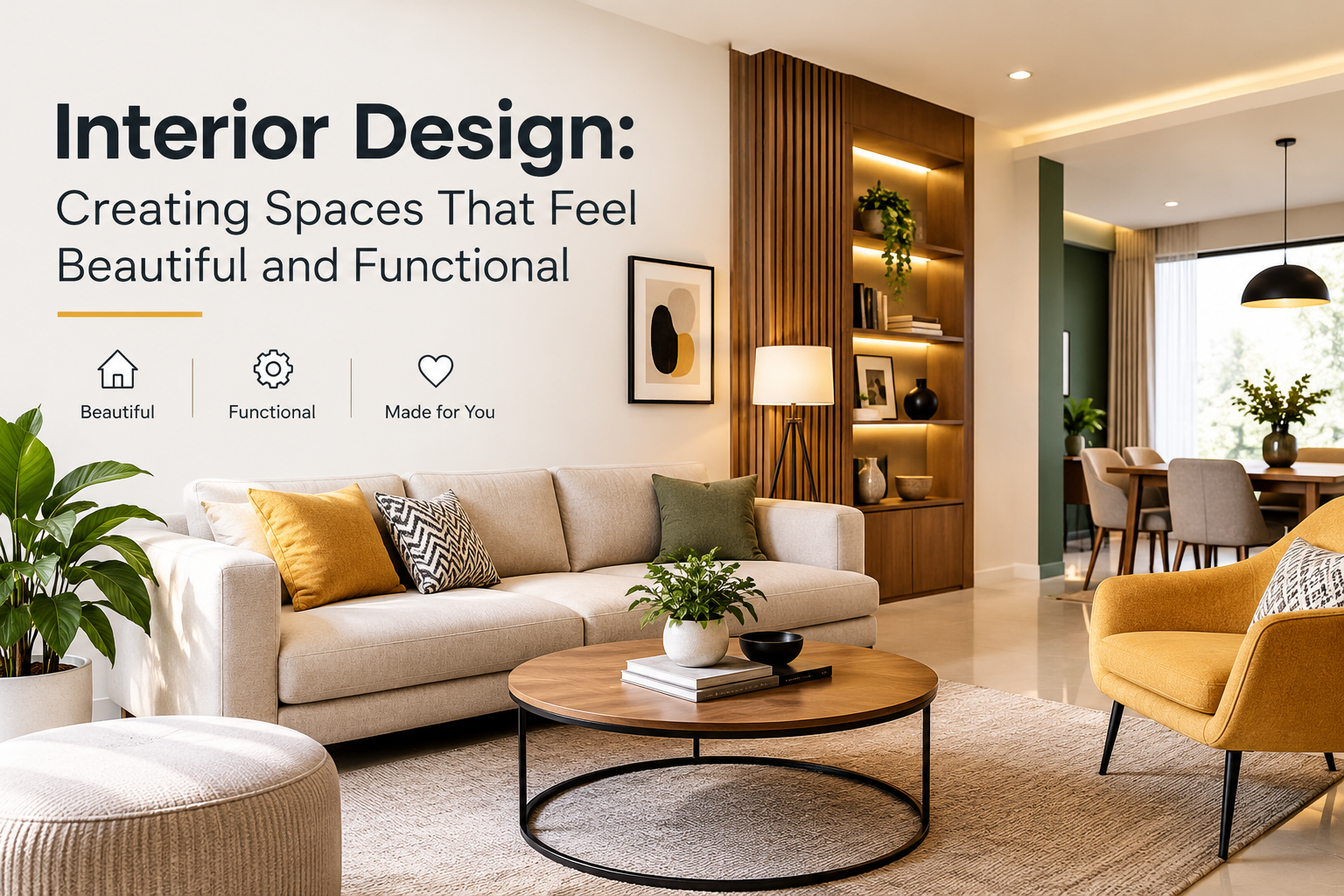
Interior Design: Creating Spaces That Feel Beautiful and Functional
Thoughtful Interior Design That Brings Comfort, Style and Functionality Together
A well-designed space can make everyday life more comfortable, organised and enjoyable. Whether it is a new home, renovated apartment, office, showroom or commercial space, the right interior design can completely change how people experience it.
Today, people are looking beyond attractive furniture and decorative walls. They want interiors that match their lifestyle, work requirements and personal taste. This is why professional home interior design and home and office interior design services are becoming increasingly important in India.
From choosing the right colour palette to planning furniture, lighting, storage and materials, every detail can contribute to a better space.
What Is Interior Design?
Interior design is the process of planning and creating an indoor space according to its purpose, appearance and usability. It combines creativity with practical planning to make a space comfortable, functional and visually appealing.
A professional interior designer considers several factors, including room size, natural light, furniture placement, colour combinations, flooring, ceiling design, storage and lighting.
Good design is not only about making a room look beautiful. It is also about making sure the space works well for the people using it.
Why Home Interior Design Matters
Your home should reflect your lifestyle and personality. A thoughtfully planned home interior design can make even a compact apartment feel spacious and comfortable.
Indian homes often need smart solutions because space can be limited. Storage becomes an important consideration, especially in bedrooms, kitchens and living areas.
For example, modular storage, multi-purpose furniture and well-planned cabinets can help keep the home organised without making it feel crowded.
Lighting is another important part of home interiors. A combination of natural light, ceiling lights, decorative lighting and task lighting can create different moods within the same space.
Planning Home Interiors According to Your Lifestyle
Every family has different requirements. A design that works for one home may not necessarily work for another.
A family with children may need durable furniture, additional storage and easy-to-clean surfaces. A working couple may prefer a dedicated work-from-home area. Someone who enjoys entertaining guests may want a spacious living and dining area.
Therefore, interior planning should begin with understanding how the space will actually be used.
A professional designer can help convert these requirements into a practical design plan.
Home and Office Interior Design: Different Needs, One Approach
Home and office interior design may share some basic principles, but their requirements are different.
A home generally focuses on comfort, privacy and personal expression. An office, on the other hand, needs to support productivity, collaboration, communication and brand identity.
Office interiors may include reception areas, meeting rooms, workstations, cabins, breakout zones and storage spaces. Each area needs to serve a specific purpose.
The colour scheme, furniture and lighting can also influence the overall atmosphere of a workplace. A well-planned office can create a professional environment while making employees and visitors feel comfortable.
How to Choose an Interior Designer Near Me
When people search for an interior designer near me, they are usually looking for someone who understands their location, requirements and budget.
Before selecting a designer, it is useful to review their previous projects and understand their design approach.
Communication is equally important. Discuss your requirements, preferred style, expected timeline and budget before starting the project.
You should also ask how the designer manages material selection, vendors, project coordination and execution.
A clear discussion at the beginning can reduce confusion during the project.
Interior Designer vs Interior Decorator
The terms interior designer and interior decorator are often used interchangeably, but their roles can be different.
An interior designer generally works on the planning and functionality of a space. This may include layouts, furniture planning, lighting, materials, storage and other structural or functional considerations.
An interior decorator mainly focuses on the visual appearance of a space. This can include colours, curtains, furniture styling, artwork, accessories and decorative elements.
For a complete interior project, both planning and decoration can play an important role.
Important Elements of a Good Interior
1. Space Planning
Space planning determines how different areas will be used. Furniture should be positioned in a way that allows people to move comfortably.
2. Lighting
Lighting can completely change the appearance of a room. Natural light should be considered along with ambient, task and accent lighting.
3. Colours
Colours influence the overall mood of a space. Neutral shades can create a calm appearance, while carefully selected accent colours can add personality.
4. Furniture
Furniture should balance comfort, functionality and appearance. The size of furniture should also match the available space.
5. Storage
Smart storage can help keep interiors clean and organised. Built-in cabinets, wardrobes, shelves and multifunctional furniture can be useful solutions.
6. Materials and Finishes
Flooring, wall finishes, laminates, fabrics, glass, wood and other materials contribute to the overall appearance and durability of an interior.
Why Professional Interior Planning Is Valuable
Planning interiors without professional guidance can sometimes result in mismatched furniture, inefficient layouts or unnecessary expenses.
An experienced professional can help bring different elements together and create a consistent design.
Professional planning can also help homeowners and businesses make informed decisions about materials, furniture, lighting and space utilisation.
For Indian homes and offices, practical considerations such as maintenance, climate, available space and daily usage are especially important.
Sun India for Interior Design Solutions
Sun India provides solutions for spaces where design, branding and functionality need to work together. Its experience across display, interiors and related solutions can be useful for businesses looking to create a distinctive physical environment.
From planning visual elements to developing practical interior solutions, a well-coordinated approach can help businesses create spaces that represent their brand while serving everyday requirements.
For more information about its services and solutions, visit sunindia.in/.
Interior Design Trends for Modern Indian Spaces
Modern Indian interiors are increasingly moving towards clean, practical and personalised designs.
Minimalist layouts, natural-looking materials, multifunctional furniture and smart storage are popular choices. People are also becoming more interested in sustainable materials and energy-efficient lighting.
For offices, flexible workspaces and collaborative areas are becoming more common. Businesses are looking for interiors that reflect their brand identity while providing employees with a comfortable working environment.
The most important trend, however, is personalisation. Instead of simply following a trend, the design should suit the people who use the space.
Final Thoughts
A successful interior is a combination of aesthetics, functionality and thoughtful planning. Whether you are designing a new home, renovating an existing property or developing an office, every decision can influence the final experience.
From home interior design to home and office interior design, professional planning can help create spaces that are comfortable, practical and visually appealing.
If you are searching for an interior designer near me or an experienced interior decorator, compare portfolios, understand the scope of work and discuss your expectations clearly before starting the project.
A well-planned interior is not simply about how a space looks. It is about how naturally and comfortably people can live and work in it.
Frequently Asked Questions
1. What does interior design include?
Interior design includes planning the layout, furniture, lighting, colours, storage, materials and overall functionality of an indoor space. Depending on the project, it may cover bedrooms, living rooms, kitchens, offices, reception areas and other spaces. The objective is to create an environment that looks attractive while remaining comfortable, practical and suitable for everyday use.
2. How do I find an interior designer near me?
To find an interior designer near me, start by checking portfolios, previous projects, client reviews and the services offered. Discuss your design preferences, space requirements, budget and expected timeline before finalising a professional. It is also helpful to understand whether the designer handles material sourcing, vendor coordination, execution and project management.
3. What is the difference between an interior designer and an interior decorator?
An interior designer generally focuses on space planning, functionality, layouts, furniture placement, lighting and material selection. An interior decorator mainly focuses on the visual appearance of a space through colours, furniture styling, fabrics, accessories and decorative elements. Depending on the project, homeowners or businesses may require either one or a combination of both services.
4. Why is home interior design important?
Home interior design helps create a space that suits your lifestyle, comfort and daily requirements. Good planning can improve storage, movement, lighting and furniture placement while creating a cohesive appearance. It can also help make better use of available space, particularly in Indian apartments and homes where efficient space utilisation is often important.
5. What should I consider before starting an interior project?
Before starting an interior project, consider your budget, space requirements, preferred design style, storage needs, materials, lighting and expected completion timeline. Make a clear list of priorities and discuss them with the professional. A detailed plan can help reduce last-minute changes and make the execution process more organised and predictable.
Contact Sun India
Looking for reliable solutions for brand activation, BTL activation, retail branding, displays, kiosks, signage, or merchandising? Connect with Sun India to discuss your branding and activation requirements.
Sun India - Events & Production Company
A-901, 9th Floor, Urbtech Trade Center, Sector-132,
Noida – 201301, Gautam Buddh Nagar,
Uttar Pradesh, India
Website: https://sunindia.in/
Email: mail@sunindia.in
Mobile No.: 9899091708, 9899548200
Get in touch with Sun India to plan customised branding solutions that help your business create a strong and engaging presence.