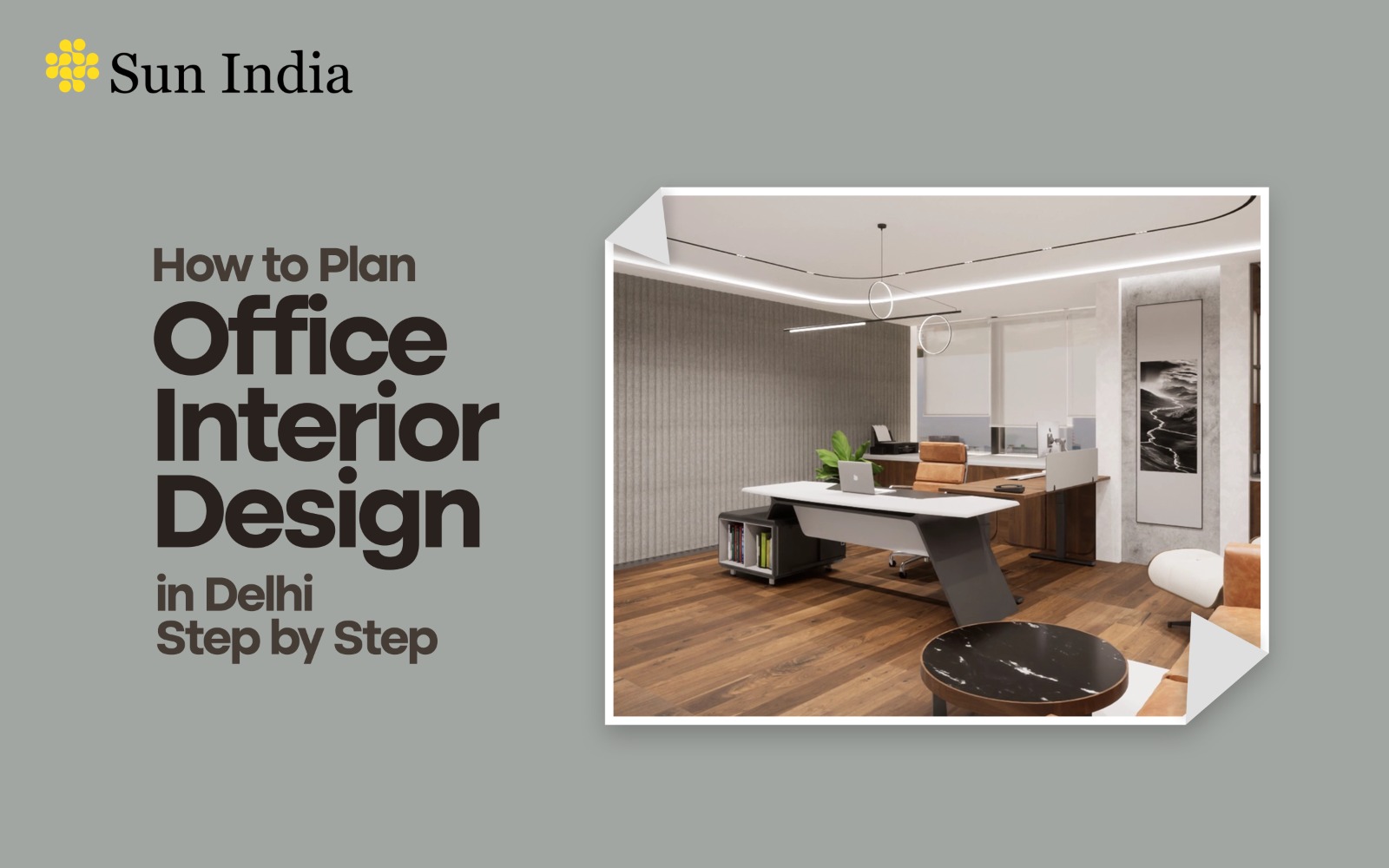
How to Plan Office Interior Design in Delhi Step by Step
From corporate hubs in Connaught Place to startup clusters in Gurugram and Noida, workplaces are no longer just functional spaces, they are strategic assets. The way an office looks and feels directly influences employee productivity, client perception, and brand identity.
Planning office interior design in Delhi requires more than selecting furniture and paint colors. It involves aligning business goals with space utilization, compliance norms, workforce needs, and long-term scalability. Factors such as high real estate costs, local building regulations, climate conditions, and hybrid work models must all be considered.
Whether you are setting up a new workspace or renovating an existing one, a structured, step-by-step approach ensures clarity and cost control. This guide explains how to plan office interior design in Delhi effectively, from defining objectives to final execution. It also highlights how working with an experienced firm like Sun India can streamline the process while maintaining quality and compliance.
Step 1: Define Your Objectives and Workspace Requirements
Before discussing layouts or materials, clarify your business goals.
Identify Core Objectives
Ask:
- Are you expanding your team?
- Do you want to improve collaboration?
- Is rebranding part of your growth strategy?
- Are you shifting to a hybrid work model?
Office interior design in Delhi should reflect these objectives clearly.
Assess Functional Requirements
Break down your space needs:
- Number of workstations
- Cabins and meeting rooms
- Reception and waiting areas
- Breakout zones and cafeterias
- Storage and server rooms
A clear requirement list prevents unnecessary redesign later.
Step 2: Set a Realistic Budget Framework
Budget planning is critical in Delhi NCR, where commercial property and execution costs can vary significantly.
Key Budget Components
- Design consultation fees
- Civil work and partitioning
- Electrical and HVAC systems
- Furniture and fixtures
- Branding and signage
- Technology infrastructure
Avoid allocating the entire budget to aesthetics. Functionality and compliance should take priority.
When companies search for the best interior design company in Delhi NCR, they often overlook budget transparency. Instead of focusing on labels, prioritize firms that offer detailed cost breakdowns and phased execution plans.
Step 3: Conduct Site Evaluation and Space Planning
A thorough site assessment determines what is feasible.
Understand Structural Constraints
Check:
- Load-bearing walls
- Ceiling height
- Natural light sources
- Ventilation systems
- Fire exit placement
These factors influence layout decisions.
Develop a Space Plan
A space plan should define:
- Circulation paths
- Desk arrangements
- Meeting room positioning
- Acoustic separation zones
Efficient space planning reduces congestion and improves workflow.
Step 4: Align Design with Brand Identity
Your office reflects your brand.
Incorporate Brand Elements
- Use brand colors subtly in walls or furniture
- Display company values in common areas
- Design reception areas that communicate professionalism
For companies in Delhi, where client meetings are frequent, the reception and conference areas often make the first impression.
Sun India, for instance, emphasizes blending functionality with brand storytelling in office environments.
Step 5: Focus on Ergonomics and Employee Well-Being
A visually appealing office is ineffective if it compromises comfort.
Prioritize Ergonomic Design
- Adjustable chairs with lumbar support
- Proper desk height
- Adequate leg space
- Anti-glare lighting
Ergonomics reduce health issues and absenteeism.
Improve Indoor Environment Quality
Delhi’s climate makes air quality and ventilation crucial. Consider:
- Air purification systems
- Indoor plants
- Energy-efficient HVAC systems
- Natural lighting optimization
Employee wellness contributes directly to productivity.
Step 6: Plan Lighting and Electrical Layout
Lighting impacts mood, focus, and energy consumption.
Layered Lighting Strategy
- Ambient lighting for general visibility
- Task lighting for workstations
- Accent lighting for branding areas
Ensure electrical planning includes:
- Adequate power outlets
- Data cabling routes
- Server room power backup
- Surge protection systems
Proper electrical planning avoids future disruptions.
Step 7: Choose Materials Suitable for Delhi’s Conditions
Material selection should consider durability and climate.
Recommended Considerations
- Moisture-resistant laminates
- Scratch-resistant surfaces
- Heat-resistant flooring materials
- Acoustic panels for noise control
High footfall offices require robust materials to minimize maintenance costs.
Step 8: Ensure Regulatory Compliance
Office interior design in Delhi must adhere to local regulations.
Important Compliance Areas
- Fire safety norms
- Emergency exits and signage
- Electrical safety standards
- Building management approvals
Non-compliance can delay occupancy or result in penalties. An experienced design partner ensures documentation and approvals are handled correctly.
Step 9: Integrate Technology and Smart Features
Modern offices depend heavily on technology.
Smart Office Elements
- Automated lighting systems
- Conference room AV integration
- Access control systems
- Occupancy sensors
Technology should enhance efficiency, not complicate operations.
Step 10: Create Flexible and Future-Ready Spaces
Work models are evolving. Design should allow adaptability.
Flexible Layout Strategies
- Modular workstations
- Movable partitions
- Multi-purpose meeting rooms
- Shared collaboration zones
Future-ready planning prevents expensive redesigns when teams expand.
Step 11: Develop a Detailed Execution Timeline
A structured timeline prevents project overruns.
Typical Phases
- Concept design
- Detailed drawings and approvals
- Procurement
- Civil and electrical execution
- Furniture installation
- Final inspection
Clear milestone tracking ensures timely completion.
Step 12: Conduct Final Review and Quality Checks
Before handover, perform a comprehensive review.
Inspection Checklist
- Electrical functionality
- HVAC performance
- Furniture stability
- Finishing quality
- Safety compliance
Document any corrections required before occupancy.
Why Professional Guidance Matters
Planning office interior design in Delhi involves multiple stakeholders, including designers, contractors, building authorities, and technology vendors. Coordination errors can increase costs and delays.
A structured design partner like Sun India supports:
- Detailed planning
- Transparent budgeting
- Compliance management
- End-to-end execution
The goal is not just to create a visually appealing office, but to build a workspace aligned with business growth.
Frequently Asked Questions (FAQs)
1. How long does office interior design in Delhi typically take?
Project timelines vary based on size and complexity. Small offices may take 6–8 weeks, while larger corporate spaces can require 12–16 weeks including approvals and procurement.
2. What is the first step in planning office interiors?
Start by defining business objectives and workforce requirements. Clear planning ensures design decisions align with operational goals.
3. How important is compliance in Delhi NCR office projects?
Compliance is essential. Fire safety, electrical norms, and building approvals must be completed before occupancy to avoid penalties.
4. Should startups invest heavily in office interiors?
Startups should focus on functional, scalable designs rather than excessive aesthetics. Flexible layouts help manage growth without frequent redesign.
5. How do I choose the right design partner?
Look for firms with experience in commercial projects, transparent costing, clear timelines, and regulatory knowledge. Avoid decisions based solely on marketing claims.
Conclusion:
Office interior design in Delhi is not just about décor; it is about creating an environment that supports productivity, collaboration, and brand positioning. A step-by-step approach helps manage budgets, timelines, and compliance efficiently.
From defining objectives to integrating smart technology, every stage plays a crucial role in building a functional workspace. Thoughtful planning ensures that your office adapts to evolving business needs while maintaining professional standards.
If you are considering upgrading or building a new workspace, consulting experienced professionals like Sun India can help translate your business vision into a practical and compliant office environment. A well-planned office is not an expense; it is an investment in long-term growth.