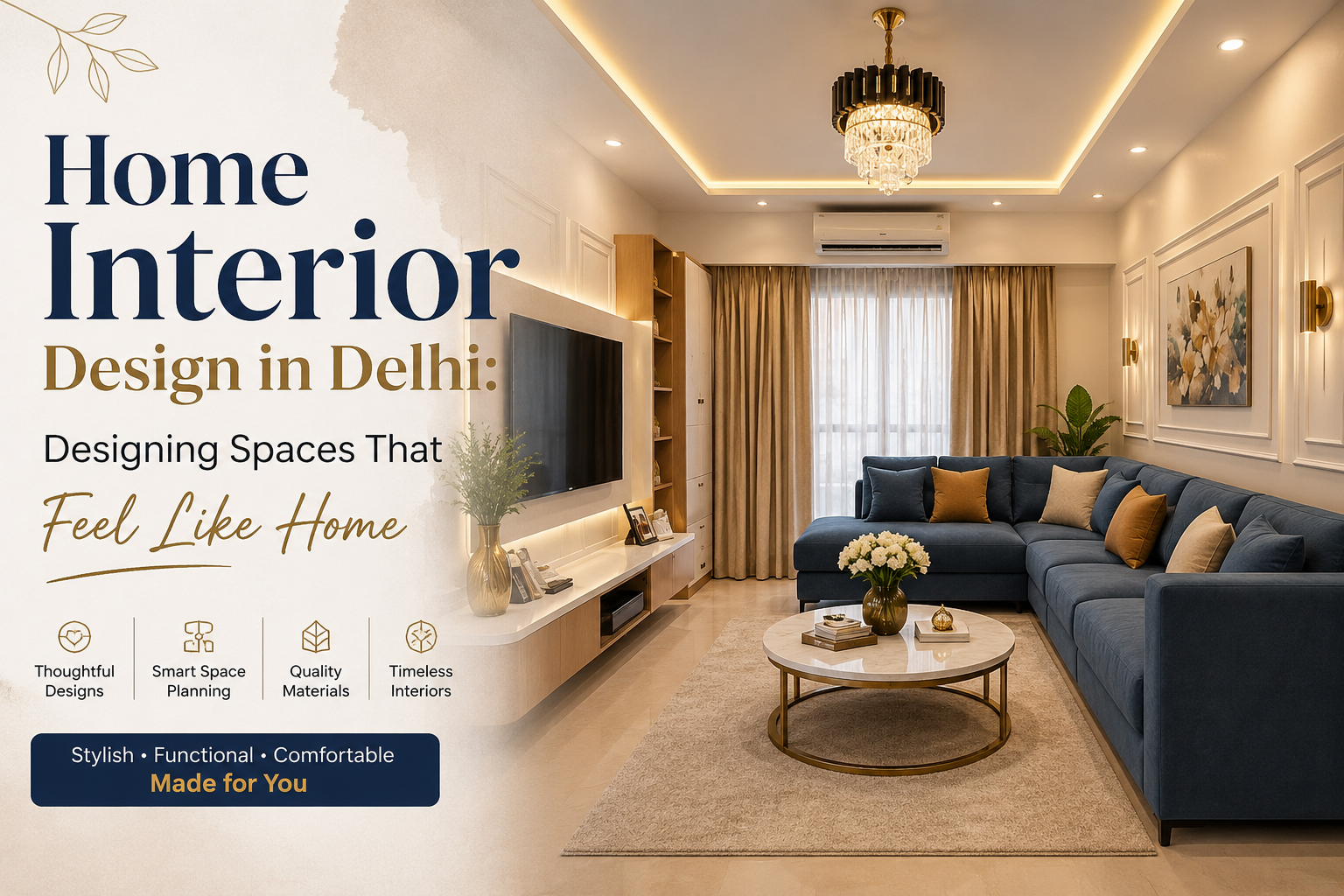
Home Interior Design in Delhi: Designing Spaces That Feel Like Home
Create a comfortable, stylish and functional home with thoughtful home interior design in Delhi tailored to your space, lifestyle and everyday needs.
Designing a home is not simply about selecting beautiful furniture or choosing attractive wall colours. A well-designed home should feel comfortable, organised and practical while also reflecting the personality of the people living in it.
In a busy city like Delhi, homeowners often have to make the most of limited space. Apartments, builder floors, independent houses and modern flats all come with different layouts and requirements. This makes professional home interior design in Delhi an important part of creating a space that looks good and works efficiently.
From living rooms and bedrooms to modular kitchens, storage areas and home offices, every corner can be planned according to its purpose.
What Is Home Interior Design?
Home interior design is the process of planning and improving the indoor spaces of a home to make them more functional, comfortable and visually appealing.
It involves several elements, including:
- Space planning
- Furniture selection
- Lighting design
- Colour combinations
- Flooring and wall finishes
- Modular storage
- Kitchen planning
- Bedroom design
- Decorative elements
- Electrical and functional requirements
The goal is not to fill a room with expensive products. Instead, the focus should be on using the available space intelligently.
A simple home with thoughtful planning can often feel more comfortable than a heavily decorated space without proper organisation.
Why Is Home Interior Design Important in Delhi?
Delhi homes come in many sizes and layouts. Some apartments offer compact rooms, while independent houses may provide larger spaces but require detailed planning across multiple floors.
This is why interior design in Delhi needs to be practical and customised.
A professionally planned interior can help homeowners:
- Use available space efficiently
- Create better storage
- Improve movement between rooms
- Select suitable furniture
- Create comfortable lighting
- Maintain a consistent design theme
- Make rooms feel more spacious
- Organise everyday belongings
Good design also reduces the chances of making costly changes after installation.
Key Areas of Home Interior Design in Delhi
A complete home interior project usually involves multiple areas. Each space has a different purpose and should be planned accordingly.
Living Room Interior Design
The living room is usually one of the most visible areas of a home. It is where families spend time together and where guests are welcomed.
A good living room design should balance seating, movement, lighting and storage.
TV units, sofas, centre tables, wall panels, curtains and decorative elements should complement one another without making the room feel crowded.
For smaller Delhi apartments, wall-mounted furniture and compact seating can help maintain an open appearance.
Bedroom Interior Design
A bedroom should feel peaceful and comfortable.
The bed remains the main focal point, but other elements such as wardrobes, bedside tables, lighting and dressing units also require careful planning.
Soft colours, warm lighting and clutter-free storage can create a more relaxing environment.
Wardrobes can also be designed according to the available wall space so that storage does not unnecessarily reduce the usable area.
Modular Kitchen Design
The kitchen is one of the most important areas of a modern home.
A well-planned modular kitchen should provide sufficient storage while keeping cooking and cleaning activities convenient.
Important considerations include:
- Cabinet layout
- Counter space
- Appliance placement
- Drawer organisation
- Lighting
- Ventilation
- Easy-to-clean materials
The kitchen layout should be based on the homeowner's daily cooking habits rather than only appearance.
Home Office Design
Work-from-home requirements have made dedicated work areas increasingly useful.
Even when a separate room is not available, a compact workstation can be created in a bedroom, living area or unused corner.
A proper desk, comfortable chair, sufficient lighting and organised storage can make the space more suitable for focused work.
Smart Storage Ideas for Delhi Homes
Storage is one of the biggest considerations when planning home interior design in Delhi.
Instead of adding multiple cabinets randomly, storage should be integrated into the overall design.
Some practical options include:
- Floor-to-ceiling wardrobes: These can maximise vertical space.
- Storage beds: Useful for keeping seasonal items and less frequently used belongings.
- Built-in TV units: These can combine entertainment space with closed and open storage.
- Window seating with storage: A useful option for selected room layouts.
- Modular kitchen cabinets: Properly divided drawers and cabinets can improve kitchen organisation.
The objective should be to keep frequently used items accessible while reducing visible clutter.
Choosing Colours for Your Home
Colour has a major influence on how a room feels.
For smaller rooms, lighter shades can help create a more open visual appearance. White, beige, cream, soft grey and pastel tones are commonly considered for such spaces.
However, this does not mean every wall needs to be white.
Accent walls, textured finishes, wooden elements and subtle patterns can add character without overwhelming the room.
The colour palette should also coordinate with flooring, furniture, curtains and lighting.
Importance of Lighting in Home Interior Design
Lighting is sometimes overlooked during home renovation, but it can completely change the appearance and usability of a room.
A well-planned lighting system can include:
- General lighting
- Task lighting
- Accent lighting
- Decorative lighting
- Natural light
For example, kitchen counters need practical task lighting, while bedrooms may benefit from softer illumination.
Living rooms can use a combination of ceiling lights, wall lights and decorative fixtures to create different moods.
Good lighting also helps highlight architectural features and selected décor elements.
Modern Home Interior Design Trends
Interior trends continue to change, but homeowners should choose ideas that suit their lifestyle rather than following every trend.
Some current design directions include:
Warm Minimalism
Instead of extremely plain interiors, warm minimalism combines simple layouts with comfortable textures, natural materials and soft colours.
Multifunctional Furniture
Furniture that performs more than one function can be particularly useful in compact homes.
Natural Elements
Wood textures, indoor plants and natural-looking materials can add warmth and character.
Concealed Storage
Hidden storage solutions help maintain a clean and organised appearance.
Flexible Spaces
A room can be designed to support multiple activities, such as working, studying or relaxing.
These approaches can make a home look contemporary while keeping it practical.
How to Choose an Interior Design Company in Delhi
Selecting the right interior design company in Delhi is an important decision because home interiors involve multiple stages.
Before finalising an interior company in Delhi, consider the following points.
Check the Portfolio
Look at previous residential projects and see whether the company has experience with spaces similar to yours.
Discuss Your Requirements
Explain your lifestyle, family requirements, preferred style, storage needs and functional expectations.
Set a Realistic Budget
Discuss your approximate budget at the beginning. This helps the design team recommend suitable materials and solutions.
Understand the Scope of Work
Clarify whether the company will handle only design or also materials, furniture, installation and execution.
Discuss Timelines
Ask about the expected project timeline and important stages such as design approval, material selection and installation.
Why Choose Sun India for Home Interior Design?
Sun India focuses on creating practical and visually engaging spaces for different residential and commercial requirements.
For homeowners looking for home interior design in Delhi, a thoughtful approach can help combine aesthetics, functionality and effective space utilisation.
Every home is different. Therefore, interior planning should be based on the actual layout, family requirements, lifestyle and budget instead of simply copying a standard design.
From space planning and storage ideas to furniture and finishing details, every element should contribute to the overall usability of the home.
How to Plan Your Home Interior Project
Before starting the project, prepare a basic requirement list.
Write down:
- Which rooms need renovation?
- What storage requirements do you have?
- What type of furniture is required?
- Do you need a home office?
- What design style do you prefer?
- What is your approximate budget?
- Which materials and finishes do you prefer?
- What is your expected completion timeline?
Having these points ready can make discussions with an interior design professional much easier.
Home Interior Design in Delhi: Final Thoughts
A successful home should be more than visually attractive. It should support your everyday lifestyle.
With the right home interior design in Delhi, even a compact apartment can become organised, comfortable and welcoming. Smart storage, appropriate furniture, good lighting and thoughtful space planning can make a noticeable difference.
Whether you are building a new home or renovating an existing one, choosing an experienced interior design company in Delhi can help you plan the project more systematically.
The best interior is ultimately one that feels right for the people living in it.
Frequently Asked Questions
1. What does home interior design in Delhi include?
Home interior design in Delhi can include space planning, furniture layouts, modular kitchens, wardrobes, lighting, colour selection, wall finishes, flooring, storage and décor. Depending on the project, an interior design company may also provide design drawings, material recommendations and execution support according to the homeowner's requirements.
2. How do I choose an interior design company in Delhi?
Start by reviewing the company's residential portfolio and previous projects. Discuss your requirements, preferred design style, budget and expected timeline. Also clarify the scope of services, materials, execution responsibilities and communication process. Choosing a company that understands your lifestyle and space can make the overall interior project more organised.
3. Can home interior design make a small Delhi apartment look bigger?
Yes. Proper space planning can make a compact home feel more open. Light colours, suitable furniture dimensions, built-in storage, mirrors, sliding solutions and effective lighting can reduce visual clutter. The key is to use available floor and wall space carefully while maintaining sufficient movement areas throughout the home.
4. How important is storage in home interior design?
Storage is extremely important, especially in urban homes where available space can be limited. Well-planned wardrobes, modular kitchen cabinets, storage beds, TV units and built-in shelves can help organise belongings. Good storage planning keeps everyday items accessible while reducing clutter and maintaining a cleaner overall appearance.
5. What should I discuss with an interior design company before starting?
Discuss your space requirements, lifestyle, preferred design style, budget, materials, furniture needs and expected timeline. You should also understand what services are included in the project and who will manage execution. Clear communication at the beginning can reduce confusion and help keep the project aligned with your expectations.
6. Is modern interior design suitable for every home?
Modern interior design can be adapted to different types of homes, but the final approach should depend on the property's size, layout and residents' lifestyle. Instead of copying a trend, homeowners should select practical elements that suit their daily needs. A customised design generally provides better long-term functionality and comfort.