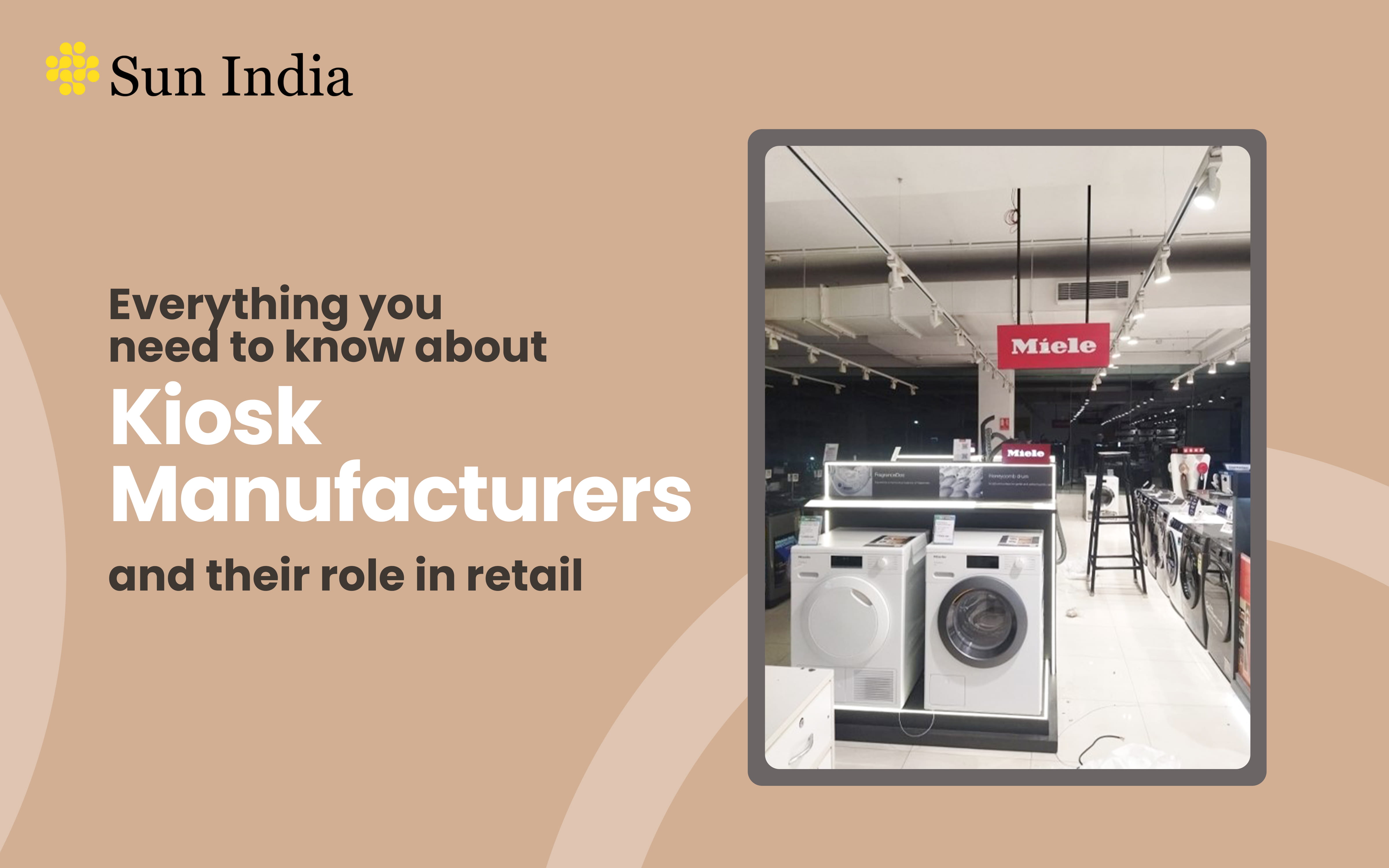
Everything You Need to Know About Kiosk Manufacturers and Their Role in Retail
Shopping malls, airports, metro stations, and high-street markets are no longer just places to browse, they are carefully designed environments that influence how customers interact with brands. In this transformation, kiosks have emerged as a practical and flexible retail format.
Kiosks are compact, self-contained units that allow businesses to showcase products or services in high-footfall areas without the need for large retail spaces. Their growing popularity has increased the demand for professional kiosk manufacturers who can design, build, and install these units efficiently.
For businesses exploring kiosk manufacturers in Delhi NCR, the focus is not only on aesthetics but also on functionality, durability, and brand alignment. Companies like Sun India and similar providers approach kiosk development as a structured process that combines design, engineering, and retail strategy.
This article explains what kiosk manufacturers do, how they contribute to retail environments, and why their role is becoming increasingly important in modern retail planning.
What Are Kiosk Manufacturers?
Kiosk manufacturers are specialized service providers who design, fabricate, and install kiosks for retail and commercial use.
Key Functions
- Designing kiosk structures based on brand requirements
- Selecting materials for durability and visual appeal
- Fabricating and assembling components
- Installing kiosks in designated retail spaces
Their role goes beyond construction, they ensure that kiosks function as effective retail units.
Types of Kiosks in Retail
Retail Product Kiosks
Used for selling products such as electronics, accessories, or food items in malls and markets.
Service Kiosks
Designed for services like ticket booking, customer support, or information centers.
Promotional Kiosks
Temporary setups used for brand promotions, product launches, or seasonal campaigns.
Digital Kiosks
Equipped with screens or interactive systems for self-service or digital engagement.
Role of Kiosk Manufacturers in Retail
1. Optimizing Space Utilization
Retail spaces in Delhi NCR are often limited and expensive.
Kiosk manufacturers design compact units that:
- Maximize available space
- Ensure efficient product display
- Allow smooth customer movement
2. Enhancing Brand Visibility
Kiosks are placed in high-traffic areas, making visibility a key factor.
Manufacturers focus on:
- Strategic design elements
- Clear branding and signage
- Eye-catching layouts
This helps attract attention in crowded environments.
3. Supporting Quick Retail Setup
Compared to full-scale stores, kiosks can be set up faster.
This enables businesses to:
- Test new markets
- Launch products quickly
- Participate in short-term campaigns
4. Improving Customer Interaction
Well-designed kiosks encourage engagement.
Features may include:
- Open layouts for easy access
- Interactive elements
- Organized product placement
This improves the overall customer experience.
Process Followed by Kiosk Manufacturers
1. Requirement Analysis
The process begins with understanding:
- Business objectives
- Product categories
- Target audience
This helps define the purpose of the kiosk.
2. Design and Concept Development
Designers create concepts that align with brand identity.
Key considerations include:
- Layout and structure
- Color schemes and branding
- Functional requirements
3. Material Selection
Materials are chosen based on usage and environment.
Common options include:
- Metal for structural strength
- Wood for aesthetic appeal
- Acrylic for modern finishes
4. Fabrication
The kiosk is manufactured using precise techniques.
This includes:
- Cutting and shaping materials
- Assembling components
- Applying finishes
5. Installation
The final step involves setting up the kiosk at the designated location.
Proper installation ensures:
- Stability and safety
- Correct positioning
- Functional readiness
Benefits of Working with Kiosk Manufacturers
Consistent Branding
Professional manufacturers ensure that kiosks reflect the brand’s identity across all elements.
Durability and Maintenance
High-quality materials and construction improve longevity and reduce maintenance needs.
Customization
Kiosks can be tailored to suit different industries, products, and retail environments.
Scalability
Businesses can replicate kiosk designs across multiple locations for consistent branding.
Importance of Kiosks in Delhi NCR Retail Market
High Footfall Locations
Areas such as malls, transit hubs, and markets provide opportunities for kiosk-based retail.
Flexible Business Model
Kiosks allow businesses to operate without large investments in full retail spaces.
Adaptability
Kiosks can be modified based on changing market trends and customer preferences.
How Companies Like Sun India Contribute
Organizations such as Sun India focus on delivering structured kiosk solutions tailored to retail needs.
Their approach typically includes:
- Understanding client requirements
- Designing functional and visually aligned kiosks
- Managing fabrication and installation
This ensures consistency and efficiency across projects.
Challenges in Kiosk Manufacturing
Despite its advantages, kiosk development may involve challenges such as:
- Limited space for design flexibility
- Balancing aesthetics with functionality
- Ensuring durability in high-traffic areas
Experienced kiosk manufacturers address these challenges through careful planning and execution.
Factors to Consider When Choosing Kiosk Manufacturers
Experience
Manufacturers with industry experience can handle diverse project requirements.
Design Capability
Strong design capabilities ensure that kiosks are both functional and visually appealing.
Material Quality
Durable materials are essential for long-term performance.
Project Support
End-to-end services simplify the process and improve efficiency.
FAQs
1. What do kiosk manufacturers do?
They design, build, and install kiosks for retail and commercial use.
2. Are kiosks suitable for small businesses?
Yes, kiosks provide a flexible and cost-effective way to enter retail markets.
3. Can kiosks be customized?
Yes, they can be tailored to match brand identity and functional requirements.
4. How long does it take to set up a kiosk?
Timelines vary depending on design complexity and fabrication requirements.
5. Where are kiosks commonly used?
They are commonly found in malls, airports, metro stations, and high-street markets.
Conclusion:
Kiosk manufacturers play a vital role in shaping modern retail environments, especially in dynamic markets like Delhi NCR. By combining design, engineering, and functionality, they create retail units that are both practical and visually engaging.
From concept development to installation, each stage contributes to how effectively a kiosk performs in a real-world setting. Businesses working with experienced providers such as Sun India can benefit from structured processes and consistent execution.
For brands exploring new retail formats, kiosks offer a flexible way to engage customers and expand presence without the complexity of full-scale stores. Evaluating the role of kiosk manufacturers is an important step toward building efficient and impactful retail strategies.