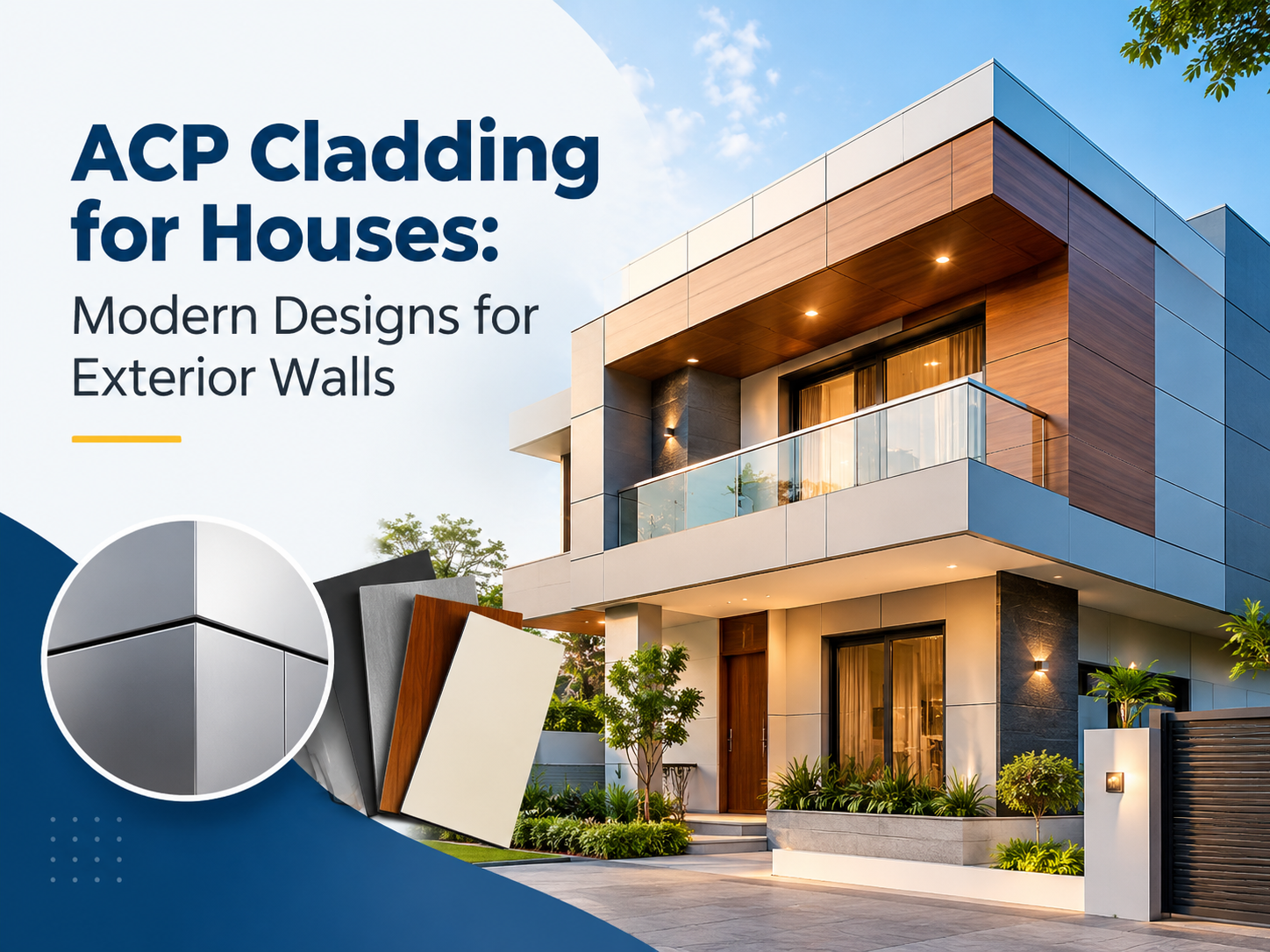
ACP Cladding for Houses: Modern Designs for Exterior Walls
Give your building a modern identity with aluminium composite cladding that combines visual appeal, practical performance and architectural flexibility.
The exterior of a building creates its first impression. Whether it is a commercial office, retail showroom, residential complex or corporate building, a well-designed façade can make the property look more professional and attractive. Today, architects, builders and business owners are exploring modern materials that offer design flexibility without making the exterior unnecessarily complicated.
One such solution is ACP cladding, which is widely used in contemporary architectural projects. It helps create clean surfaces, distinctive patterns and attractive building exteriors. With different colours, finishes and panel sizes available, aluminium composite panels can complement a wide range of architectural styles.
For businesses planning a new project or renovating an existing property, Sun India offers signage, branding, displays and architectural branding solutions that help create a consistent visual identity across physical spaces.
What Is ACP Cladding?
ACP cladding, also known as aluminium composite cladding, is an exterior or interior finishing solution made using aluminium sheets bonded to a core material. The panels are designed to provide a smooth surface and can be fabricated into different shapes and sizes according to project requirements.
An aluminum composite panel cladding system is commonly considered for commercial buildings, retail spaces, office façades, showrooms and selected residential applications. Its lightweight construction and availability in different finishes make it useful for projects where appearance and design flexibility matter.
Depending on the product specification, installation method and intended application, ACP panels can be used to create both simple and visually striking architectural designs.
Why Are Architects and Builders Choosing Aluminium Composite Panels?
Every building has different requirements. Some projects need a premium exterior appearance, while others require coordinated branding, attractive entrances or easy integration with signage. ACP panels provide several design possibilities.
1. A Modern and Professional Appearance
One major advantage of aluminium composite cladding is its clean and contemporary finish. Panels can be arranged in geometric patterns, contrasting colours or minimal designs to complement the overall architecture.
For commercial properties, this can help establish a professional image. Retail outlets and showrooms can also use coordinated exterior finishes to create a stronger connection between their physical space and brand identity.
2. Multiple Colours and Finishes
ACP panels are available in a variety of finishes, including solid colours, metallic effects, wood-inspired textures and other decorative options, depending on the manufacturer.
This flexibility makes ACP sheet cladding suitable for different design concepts. A corporate office might use a restrained metallic finish, while a retail showroom could choose bold colours that align with its brand guidelines.
3. Lightweight Construction
Compared with some traditional solid exterior materials, ACP panels are relatively lightweight. This can help simplify handling and fabrication, although the overall suitability depends on the supporting structure and installation design.
Proper structural assessment remains essential before selecting any facade aluminium composite panel system for a building.
4. Design Flexibility
ACP sheets can be cut, routed and fabricated to suit different architectural requirements. They may be used around entrances, façade sections, columns and selected decorative features.
This flexibility allows architects and designers to develop distinctive exterior concepts rather than relying on a single standardised appearance.
5. Practical Maintenance
The maintenance requirements of ACP installations depend on the coating, environmental exposure, product quality and installation details. Appropriate cleaning and periodic inspection can help preserve their appearance.
Choosing a suitable finish and following the manufacturer's maintenance instructions are important for long-term performance.
Where Can ACP Wall Cladding Be Used?
The versatility of ACP wall cladding makes it suitable for several applications across commercial and residential environments.
- Commercial buildings: Office buildings, business centres and corporate facilities can use ACP panels to create contemporary façades and coordinated exterior designs.
- Retail showrooms: Shops and showrooms can combine ACP surfaces with illuminated signage, logos and display elements to improve street-level visibility.
- Hospitality spaces: Hotels, restaurants and selected hospitality projects may use decorative ACP panels for entrances, feature walls and exterior design elements.
- Industrial and institutional buildings: Depending on technical requirements, ACP panels can be considered for selected façade sections and architectural features.
- Interior applications: Certain ACP products are suitable for interior wall features, reception areas and decorative installations. The product must be selected specifically for the intended indoor application.
ACP Cladding for Houses: Is It a Good Option?
Modern homeowners increasingly look for exterior designs that feel distinctive without appearing overly decorative. ACP cladding for houses can help achieve this by adding contrast, texture and contemporary detailing to selected portions of a building.
For example, ACP panels may be considered for entrance features, balcony elevations, boundary walls and architectural highlights. A combination of neutral colours and wood-look finishes can create a balanced appearance when used thoughtfully.
However, ACP should not automatically be treated as a replacement for every exterior finishing material. Homeowners should evaluate local weather conditions, exposure to sunlight, maintenance requirements, installation costs and fire-safety performance.
For multi-storey residential buildings, the complete façade system must comply with applicable building regulations and fire-safety requirements. The suitability of the panel core, insulation, cavity barriers and fixing system should be assessed by qualified professionals.
How to Select the Right ACP Cladding Sheet
Choosing an ACP cladding sheet involves more than selecting an attractive colour. The material must suit the building's function, environmental conditions and design objectives.
Consider the following factors before making a decision:
- Application: Decide whether the panels will be used for an exterior façade, interior wall or decorative feature.
- Panel specifications: Check thickness, aluminium skin specifications, coating quality and the manufacturer's technical documentation.
- Fire performance: Verify the tested fire classification of the complete proposed façade assembly and compliance with applicable regulations.
- Weather resistance: Consider rainfall, heat, humidity, pollution and exposure to direct sunlight.
- Installation requirements: Ensure that the support structure, fixing method, joints and drainage arrangements are properly designed.
- Budget and maintenance: Compare the total project cost, installation requirements and expected maintenance needs.
A suitable ACP cladding sheet should deliver the intended appearance while meeting the project's technical and safety requirements.
Finding an ACP Cladding Supplier: What Should You Check?
If you are searching online for an ACP cladding supplier, avoid making a decision based only on the lowest quoted price. The quality of the material and the reliability of the installation process can significantly influence the final result.
Start by reviewing the supplier's product specifications, available finishes, warranties and technical support. Ask for samples wherever possible so that you can assess the colour and surface finish before finalising the design.
It is also useful to confirm whether the supplier can provide documentation for the intended application, particularly when fire performance and exterior exposure are important considerations.
For installation projects, clarify who will handle fabrication, structural design, fixing details and site inspection. A clearly defined scope helps prevent misunderstandings during execution.
When looking for ACP cladding near me, compare suppliers based on product suitability, documented quality, project experience and after-sales support rather than relying entirely on online listings.
How Sun India Supports Modern Branding and Architectural Projects
A building's appearance is not only about its materials. For commercial properties, the exterior should also support the organisation's brand identity and customer experience.
Sun India is a brand image and solutions provider specialising in signage, point-of-purchase materials, merchandising and displays. Its services support businesses looking to create a consistent visual presence across retail outlets, commercial environments and promotional spaces.
For projects involving ACP cladding, it is important to distinguish between sourcing the panels, designing the façade and delivering associated branding elements. Depending on the project's scope, businesses should confirm the specific cladding supply, fabrication and installation services available before finalising their requirements.
Sun India can help businesses explore coordinated branding solutions involving signage, displays and visual communication. This approach is particularly relevant for retail showrooms, corporate offices and commercial spaces where the building's appearance contributes to brand recognition.
Final Thoughts
ACP cladding offers architects, builders and property owners a flexible way to create modern building exteriors. Its range of colours, finishes and fabrication possibilities makes it suitable for many commercial projects and selected residential applications.
However, the right solution depends on more than appearance. Material specifications, fire performance, structural design, weather conditions and professional installation must all be considered before selecting a façade system.
Whether you are planning a commercial building, upgrading a showroom or improving your property's exterior identity, a well-planned approach can help achieve a practical and visually consistent result. By combining suitable materials with thoughtful design and coordinated branding, businesses can create spaces that make a lasting impression.
FAQs
1. What is ACP cladding, and why is it used in modern buildings?
ACP cladding is a finishing system made from aluminium sheets bonded to a core material. It is used to create contemporary building façades, decorative wall surfaces and architectural features. Its lightweight construction, range of colours and fabrication flexibility make it suitable for many commercial projects, provided the selected panels meet the building's technical and safety requirements.
2. Is aluminium composite cladding suitable for residential houses?
Yes, aluminium composite cladding can be considered for selected residential applications, including entrance features, balcony elevations and decorative exterior sections. However, homeowners should evaluate the panel's weather resistance, fire performance, installation method and maintenance requirements. The complete façade assembly should meet applicable building regulations, especially for multi-storey residential properties and buildings with specific fire-safety requirements.
3. How do I choose the right ACP cladding sheet for my project?
Start by identifying whether the panel is intended for exterior or interior use. Compare thickness, coating quality, fire classification, weather resistance and manufacturer documentation. You should also consider the building's design, supporting structure, installation method and maintenance needs. Requesting samples and obtaining professional technical advice can help you make a suitable choice.
4. What should I check before selecting an ACP cladding supplier?
Before selecting an ACP cladding supplier, review product specifications, quality documentation, available finishes, warranties and technical support. Confirm whether the supplier can meet your project's delivery requirements and provide suitable material for the intended application. For complete façade projects, clarify responsibilities for design, fabrication, installation and inspection to avoid unexpected costs or quality issues.
5. How can I find ACP cladding near me?
To find ACP cladding near you, search local suppliers and compare their product ranges, technical documentation, customer reviews and project experience. Ask for quotations based on the required panel specifications and quantity rather than comparing prices alone. If installation is needed, confirm whether the provider offers professional fitting, site assessment and appropriate safety documentation for your project.
Contact Sun India
Planning a commercial branding or display project? Connect with Sun India to explore solutions that support your brand's physical presence.
Sun India - Events & Production Company
A-901, 9th Floor, Urbtech Trade Center, Sector-132,
Noida – 201301, Gautam Buddh Nagar,
Uttar Pradesh, India
Website: https://sunindia.in/
Email: mail@sunindia.in
Mobile No.: 9899091708, 9899548200
Discuss your project requirements, preferred finishes and branding objectives to identify a solution suited to your space.